Blu-ray: The rise of Jellyfin
I want to build a digital media library that's competitive with streaming services.
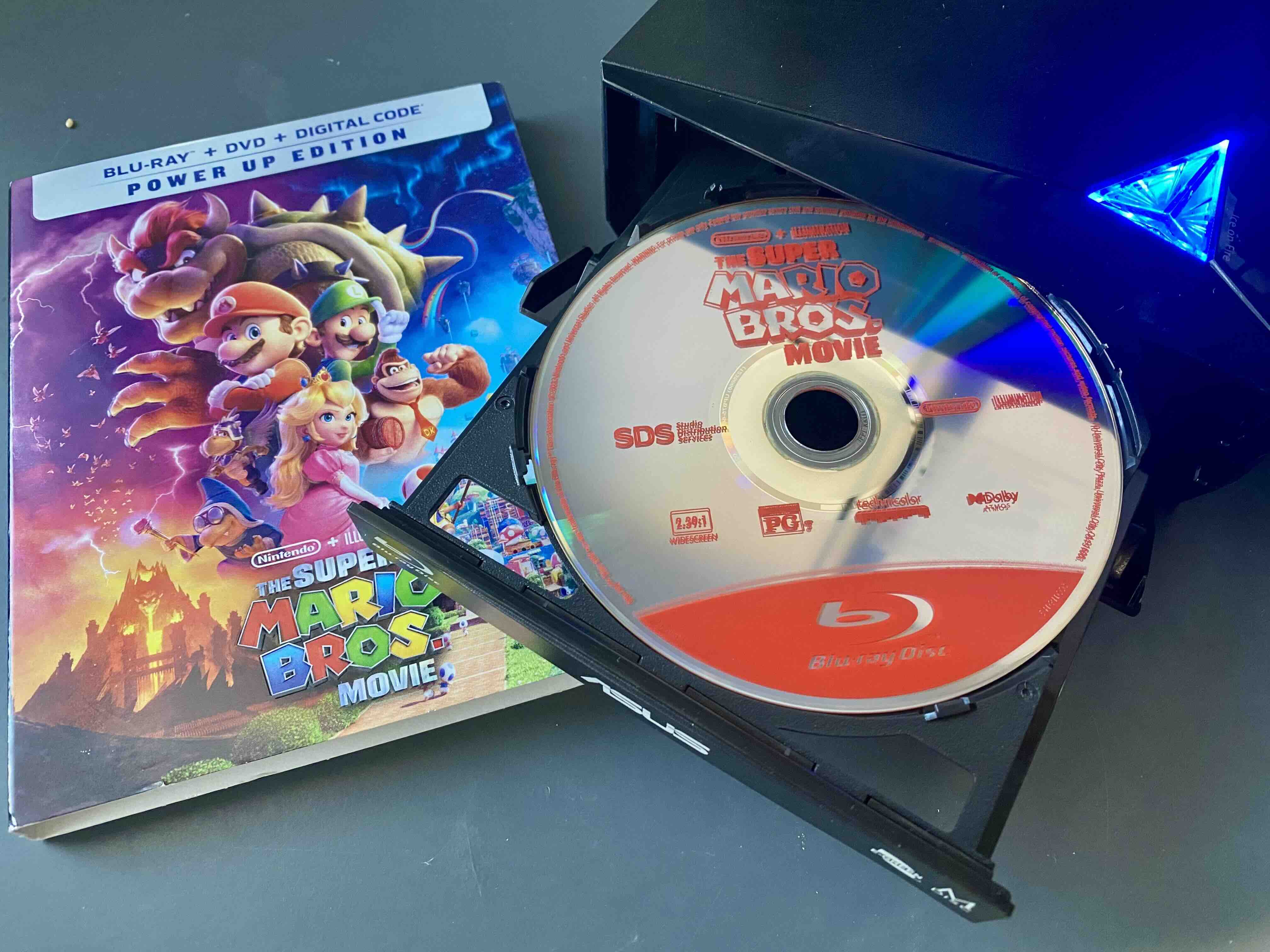
Owning my digital media is off to a strong start this year. For Christmas/Hanukkah, Santa Maccabee gave me an external USB Blu-ray drive. See, I’ve been slowly growing my Blu-ray collection from thrift stores for about $3 a disc. Some I bought from Half Price Books for more money because the discs people donate to thrift stores is, well, it’s uneven.
(Fun fact: the most common Blu-ray in thrift stores today is 2013’s Frozen. And it’s easy to see why that would be. Frozen is a movie that kids love and want to watch over and over (believe me, I know). Disney+ didn’t launch until six years after Frozen debuted. In that way, 2013 was probably the height of the Blu-ray discs. But that first generation of Frozen kids aged out of their watch-every-freaking-day phase by 2019. Now six years after that, any kid that watches a lot of Frozen today is watching it on Disney+.)
I like the idea of physical media. I think the physicality of picking up a disc case, examining it’s cover, and deciding whether or not to watch it is a brain-healthy thing, especially for a small child. It’s less abstract and more grounded in reality than picking something from the infinite pool of streaming entertainment. I can feel streaming’s lack of grounding when I can’t choose what to watch because there might be something that I’d rather watch more at this moment. There are more options than my monkey brain can sift through.
The problem with physical media, setting aside the relative inconvenience, is that streaming is the primary way we consume media in my house. The Apple TV is my family’s front-end for movies and TV and we’ve been really happy with it for the last eight years. If I converted everything in my life over to the physical media exclusively, Blu-ray discs would be an big part of that transition, but I’m not prepared to do that. Without an entire change-over to physical media, Blu-ray is a weird outlier.
That’s where the USB Blu-ray drive comes in. I’m ripping my discs to build up my digital media library with the goal to curate a viewing experience that is competitive with streaming services. Right now my video streaming service of choice is Jellyfin running on my Raspberry Pi. It’s a great start, but there are still some features that I really want.
Speaking of Disney+, that’s the first streaming service I have in my cross-hairs. Disney’s history of making classic movies for children and families makes it different from other streaming services like Netflix. Obviously Disney makes TV shows and even has their own Disney Channel, but the balance of Disney media favors theatrical releases over TV shows. That means most of the value of Disney+ comes from their stock of back-catalog movies rather than the flow of new TV shows. My thinking is that if I buy a critical mass of Disney movies, I may not need a year-round subscription to Disney+.
Something I’ve seen on Disney+ and the PBS Kids app is content hubs, which are collections of media shown in the top-level or front page of their app. In Disney+ they have hubs for their big media properties like Pixar, Marvel, and Star Wars. Within each hub they have special playlists or sub-groupings. For example, they have the Star Wars movies both in release date and in timeline order. In the PBS Kids app, they have the seasonal selections of TV episodes and movies for fall/Halloween, winter/Christmas, summer, etc. It’s all really nice and it’s exactly the kind of curation that I’d like to have for my family.
Jellyfin doesn’t have hubs exactly, but it has collections. They’re not quite as nice as the hubs in Disney+ – they’re not featured on the front page of the app, and movies in a playlist aren’t individually selectable until you open the playlist – but they’re close. I’ve started with a great thrift store find of a Blu-ray collection of Christmas movies that includes Rudolph the Red-nosed Reindeer, Frosty the Snowman, and others. That collection alone gave me what I needed to build out a winter/Christmas collection and test out Jellyfin collections as content hubs. As I said, it’s not perfect, but I’m in the early days of this project. I’ll need to sit with it, tinker a little, and test it on my family before I know if the presentation is effective.
I enjoy the work of planning something for my family in other areas of my life, such as meal planning and cooking. I learn from their responses, and make subtle variations to better meet their needs. I want to do the same thing here with digital media. Curating a digital media library will give me some (though not all) of the brain-healthy constraints that make physical media appealing. Hopefully I can achieve enough convenience to nudge commercial services out of the top row of apps on my Apple TV, and eventually out of my life.