Trying Ollama
Reading later, offline
I want to take the web offline to read on my Kindle.
Read more
A computer for my kid
I'd like to simplify things without dumbing down.
Read more
Blu-ray: The rise of Jellyfin
I want to build a digital media library that's competitive with streaming services.
Read more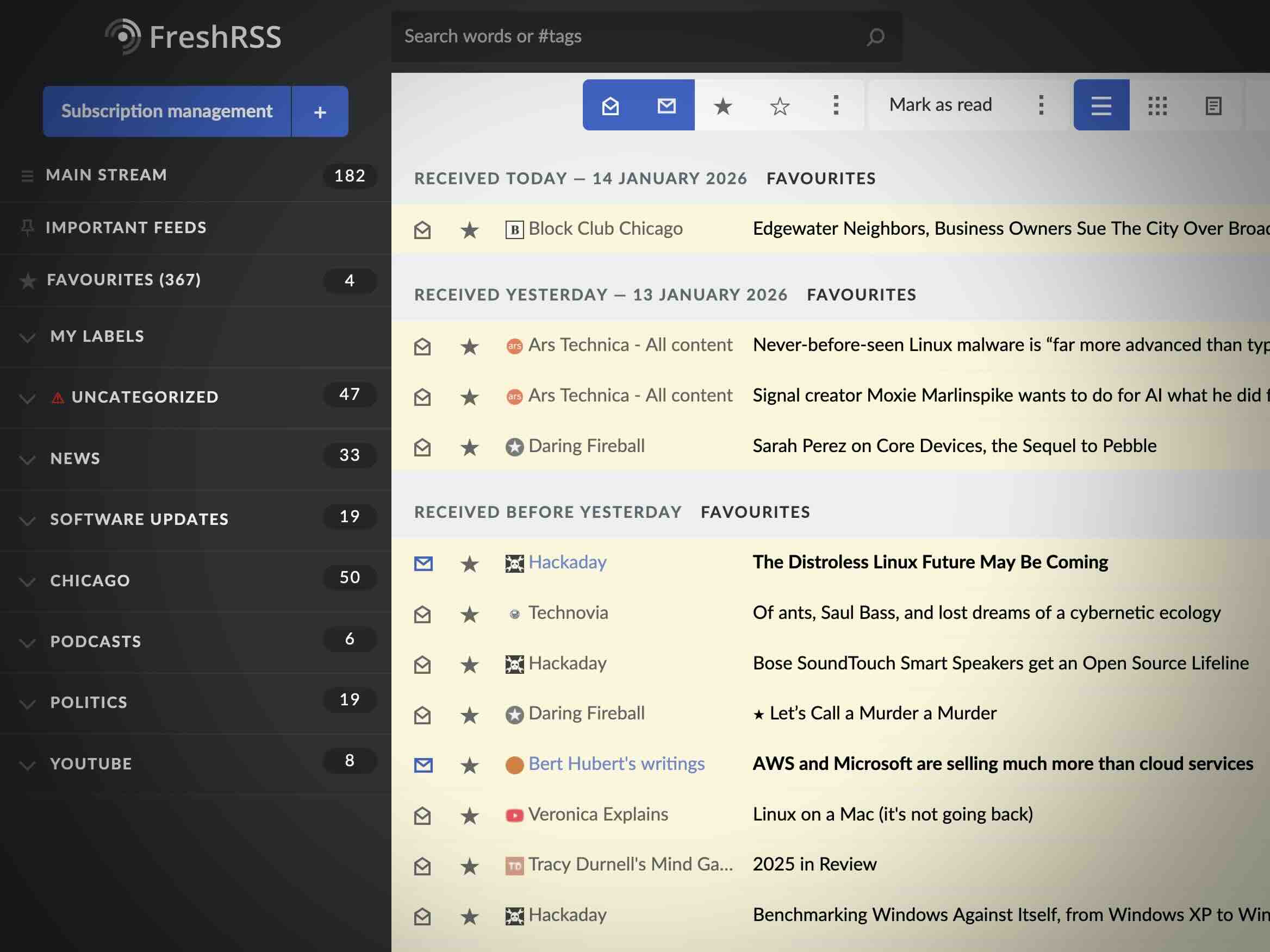
FreshRSS, favorite tech 2025
No matter how many times I re-learn that RSS is the answer to managing internet consumption, I'm always charmed by it.
Read moreIt's not sideloading and it never was
Brent Simmons, Why NetNewsWire Is Not a Web App:
What I want to see happen is for Apple to allow iPhone and iPad users to load — not sideload, a term I detest, because it assumes Apple’s side of things — whatever apps they want to. Because those devices are computers.
I’ve been calling it sideloading all along, but of course installing software is not sideloading! Words matter. The way things are framed affects how we think about them. We’re so used to locked down systems that installing software from anywhere other than Apple’s blessed App Store feels practically like a hack. Our expectations have been manipulated and now there’s no accountability for it. I think most about these low consumer expectations and lack of corporate accountability in the context of e-waste.
Smartphones are computers. They have an open-ended purpose. We expect to be able to use them for things in the future that we don’t use them for today. If you’ve ever downloaded an app in a pinch, like for hailing a cab or presenting your ticket for an event, then you’ve seen this in action. Despite smartphones’ open-ended purpose, they’re locked down like appliances. And based on how we talk about “sideloading” of software, that’s what we expect as consumers.
It’s refreshing to come across a re-framing of loading (formerly sideloading) because it’s something I’ve taken for granted for so long. And I can feel that I’ve grown quite cynical. I wouldn’t have re-examined this framing of loading software without someone else pointing it out. When I learn about most any of today’s products, I just think Well, what do you expect?, I get to feel smug, and then I move on. I think that cynicism has ironically caused me to give a pass for some consumer-hostile practices. So this is a gentle reminder to expect better because when we expect less and less, corporations get away with giving us just that.
All software is precarious
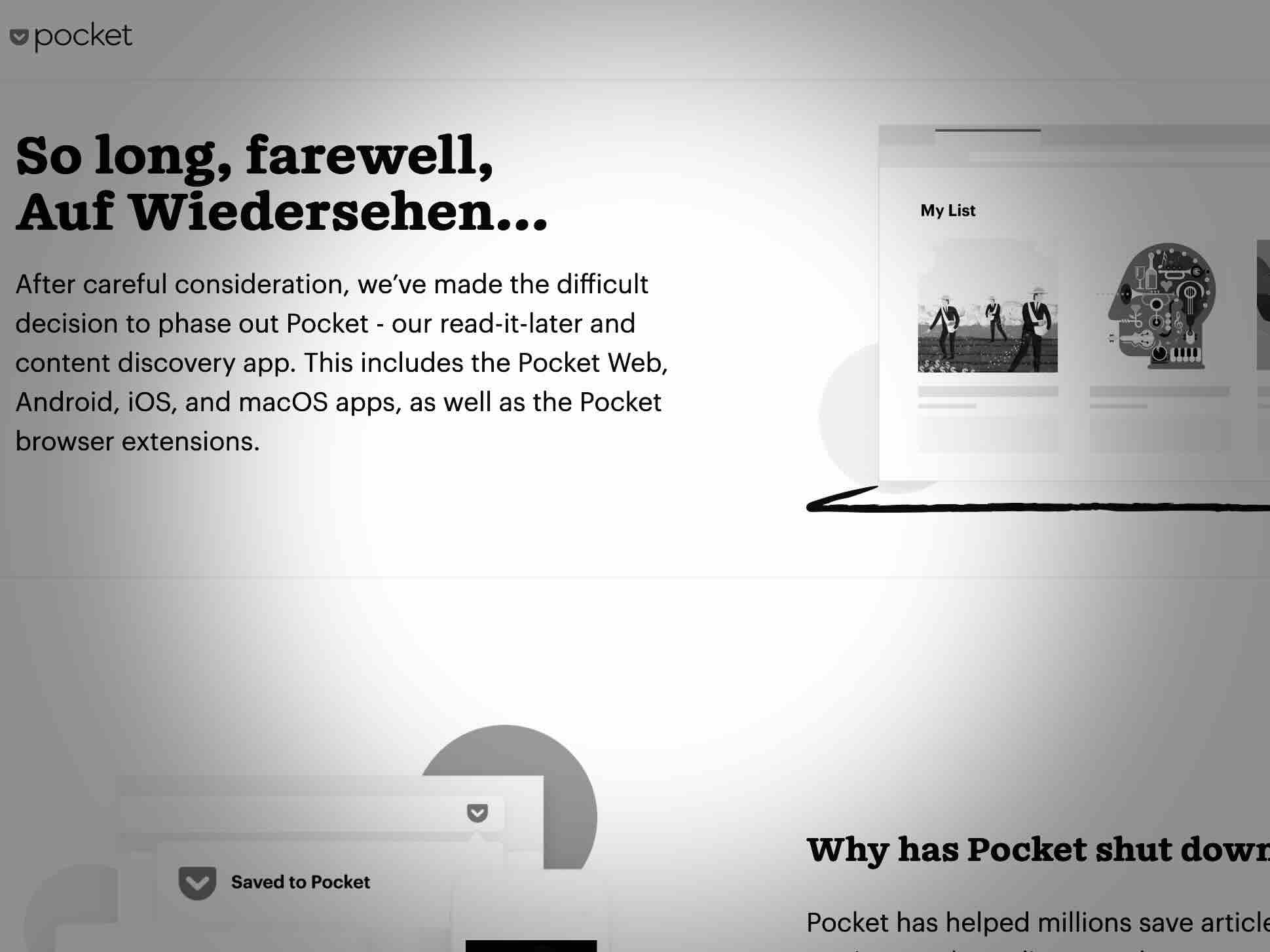
While I'm working to replace a lot of my mainstream tech, I thought this one was safe.
Read moreA new minimalism
I was excited by smartphones as one device to rule them all. In a few short years, I was miserable.
Read moreMake it yourself book from NODE
NODE is a creator (or a group?) that publishes interesting technology projects and supporting ideas on their N-O-D-E YouTube channel and website. What makes NODE interesting, beyond any individual project or video, is the ethos behind their work. In the zine Node VOL 02: Manifesting Reality, manifesting reality refers to a decentralized community using readily available technology to build the future that they want to see. It’s a critique of commercial technology, but presented with an optimistic and empowering tone, rather than complaining about any particular company or product.
The most recently published work is Make it Yourself: 1000 Useful Things to Make (YouTube) (and blog post), which announced the release of a PDF book also called Make it Yourself: 1000 Useful Things to Make. The book compiles 1000 different do-it-yourself projects from around the internet into a kind of greatest hits album.
The book’s contents are links to web pages with the original author’s instructions on how to make those projects. You will need to read it on a computer with internet access and a web browser (as opposed to an e-reader).
Most of the projects are beyond anything I would attempt, but it’s really fun to see so many nice do-it-yourself projects in one place, organized, and with attractive renderings. Check it out!
I’m still looking for valuable use-cases for LLMs. I’ve used them for low-stakes things such as a proof reader, a thesaurus1, some coding of bash scripts, HTML, and CSS (including for this website). But these are all things I can do myself. I trust the output of the LLM only because I have enough expertise and experience that I can verify the result. And if it gives me a bunch of crap, I can come up with a solution myself.
My concern is that if/when I do find a valuable use-case that the big players in LLMs will enshittify their products around that same time. I’m going into the “AI revolution” with open eyes. I know that if I get any value from it, the endgame is to extract that value (and more) back from me.
So I installed Ollama on my M1 MacBook Air.
I’ve been comparing prompts of Ollama using the model Qwen (qwen3.5:4b) to the free plan of ChatGPT. So far the answers come out mostly the same, which is really encouraging.
Free tools tend to lag behind the cutting edge consumer tools, but I’m pleasantly surprised that Ollama is so close to commercial offerings. Oh, I’m sure it’s substantially worse by some measure that matters to people who are close to this stuff, but that’s not me. I don’t rely on LLMs for anything, so if I have access to a model that’s like ChatGPT from 2-3 years ago, that’s good enough for now.
Next I’d like to try Open WebUI, which is a web front-end for Ollama that gives an interface like the usual LLM products. It seems to offer some additional features and just uses Ollama as infrastructure.
1: Using LLMs as a thesaurus is by far the best use-case I’ve found. It plays to the fundamental strengths of the software because they are models of language based on large samples of writing. I can ask for a word based on feeling, tone, connotation, etc. I can say I want a word that is like (or not like) another word. As a model of words and their relationship to other words, it makes a very good thesaurus. ↩