Over the last couple years, I replaced my Mac-only applications with alternatives that are available for both Mac and Linux. The first and biggest switch was using Firefox, and I’m really satisfied with it. I felt like Mozilla’s history in creating a browser for Linux meant I should just jump into whatever Mozilla was offering, including the bookmarking and read-later service Pocket.
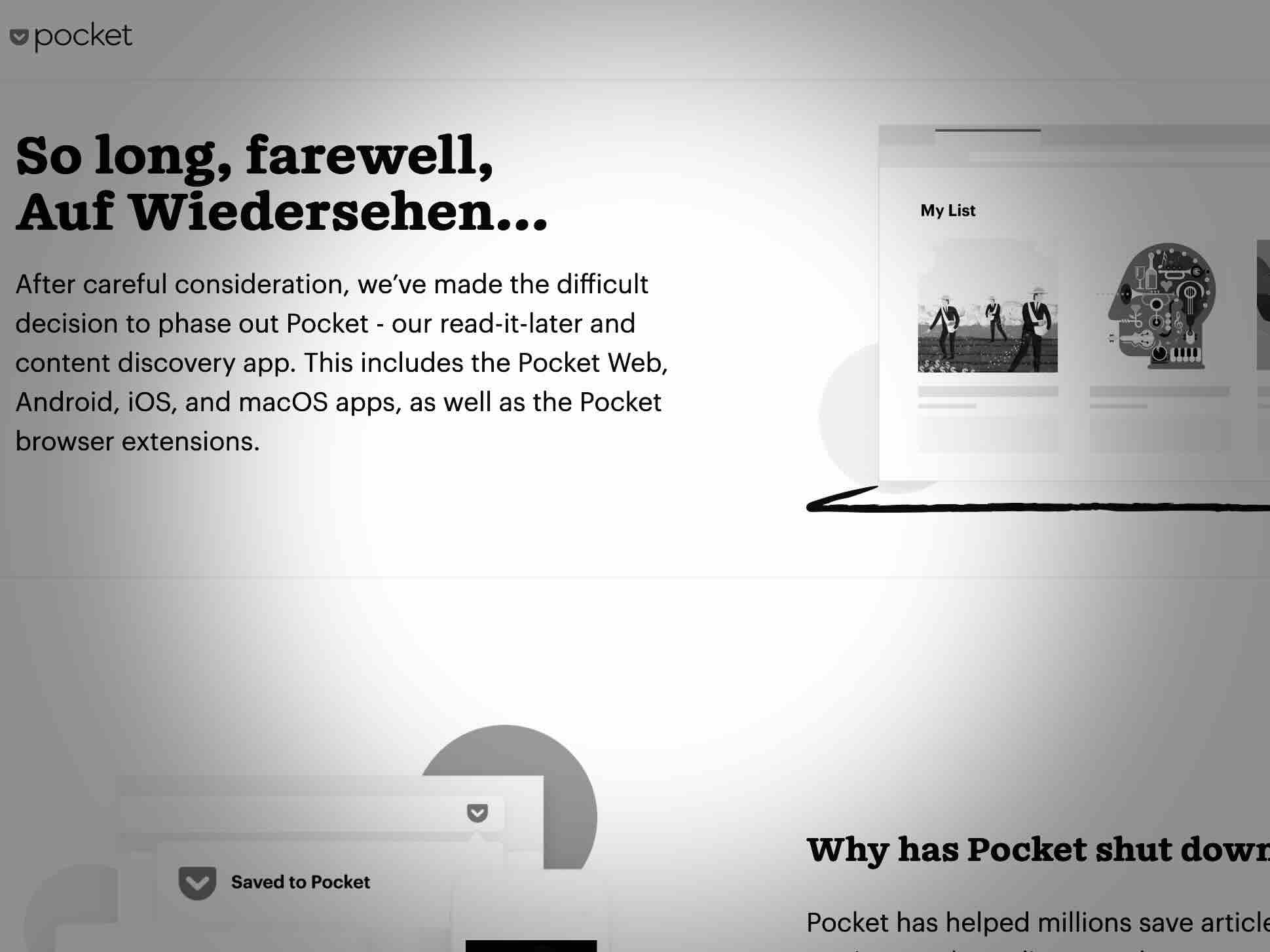
I used Pocket steadily ever since. Admittedly, a read-later service is at least partially a place I put things that I’ll never read. I read around 20-40% while the remainder is pushed down the unread stack, becoming a museum of things I wish I had the intellectual curiosity to care about. Nevertheless, it’s valuable to have a priveleged group of web links, especially ones that are cleaned up and easy to read. It was a nice addition to my tools for consuming the web. And then this past July, Mozilla shut it down for good.
I’m not naive about corporate interests. I try to avoid apps and services backed by big tech companies. For any private, closed source, or for-profit services that I use, I’m already brewing an exit strategy. I’m familiar with the purposeful degradation of platform quality a.k.a. enshittification, and I’m comfortable switching services and platforms. But this hits differently because it’s Mozilla. In all the apps I’m looking to replace, Pocket was not under consideration, not even in the same universe. That’s why it’s frustrating. It feels like replacing Pocket is a project that fell on me out of nowhere.
Look, it’s not for me to say what a company should or shouldn’t do, especially when providing a free service. I know that these things have ongoing costs and require maintenance, but I assumed whatever motivated Mozilla to acquire Pocket in 2017 would lead them to eat much of its cost too. I’m left wondering, if I can’t depend on Mozilla for the long-term, who or what can I depend on?
I think this why self-hosting is having a moment, even if for a limited group of people. The drawbacks of self-hosting are obvious. It requires technical background knowledge, research, and maintenance. It takes time to do all of that, and when you do, you end up with something that is often not as polished or feature-rich as commercial alternatives. However, using feature-rich commercial stuff is no protection from rug pulls of one kind of another.
Right now I’m self-hosting wallabag is my solution. I haven’t used it long enough to form a strong opinion about it, but so far it seems like a perfectly good one-for-one replacement for Pocket. It has a browser extension, mobile apps for reading, and it was able to import all my exported Pocket data. I can’t ask for more than that.
But it’s no salve for my broader concerns about relying on software. There’s no escaping that all software is precarious. It’s not because it’s technically unreliable or unstable, but because the overlap between my needs and the provider’s needs is fleeting. It’s especially the case for commercial software, but it’s still true for community software or even independent one-person shops.
Over at 404 Media, Sam Cole was similarly frustrated when she learned Pocket was shutting down. A colleague suggested to her “copy-pasting links to articles into a giant document to read later”, and she concludes by writing “I might have to start doing that.” It’s not a bad idea. A simple file-based solution is more durable and easier to maintain than anything will ever be.
I’ve been thinking since Pocket’s shutdown announcement that if I had saved my read-later links in a text file, none of this would matter to me. A text file is immune to the changing expectations of software. As I plan my exit from other commercial apps and services, it’s a great time to consider whether they can be replaced with a text file, document, or even a spreadsheet.
In my 20’s, the only tech I owned was an iMac computer, Nexus 5 smartphone, Nintendo Wii, and a TV set. I had this setup in part because I was broke and moving around a lot, but I was also a minimalist.
I wanted to rebuke the accumulation of stuff that I saw with my parents, so I got rid of everything that wasn’t necessary or serving my needs at the time. I avoided buying physical media, and I looked to digital technology to fill in the gaps.
The smartphone was the driver in the minimalist setup, particularly my Nexus 5 (2014). It was faster and more powerful than anything I had before, with a larger high resolution display, and it finally had good enough battery life for all-day use. When I went out, I no longer had to huddle around power outlets in public places!
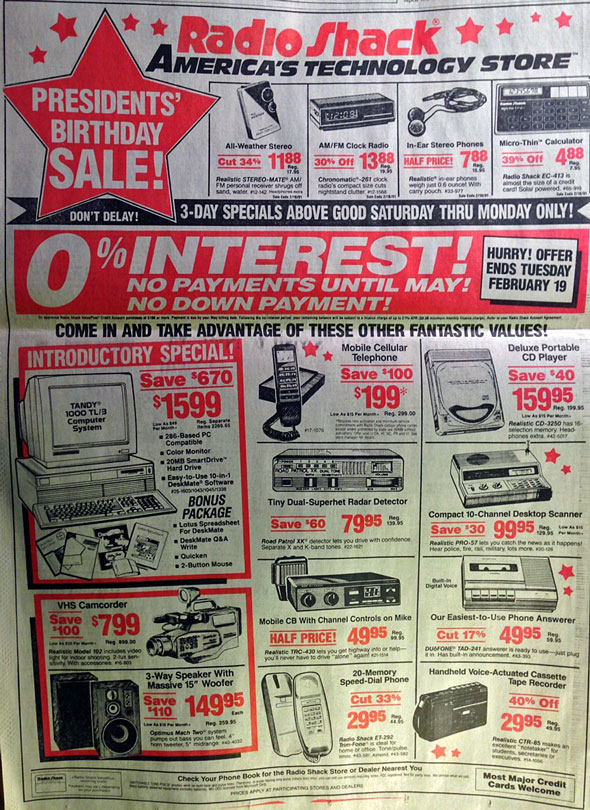
Smartphones had reached maturity, and everbody knew it. A Radioshack advertisement from 1991 went viral because a smartphone could replace nearly all of the advertised gadgets. Steve Cichon wrote “the technology of only two decades ago now replaced by the 3.95 ounce bundle… in our pockets.” It was goodbye to all our old crap and hello to modernity. We now had the everything device.
Later that year, Slate called 2014 “The Year of Outrage”. They documented that every day of the year a public figure or current event caused a backlash on social media. At the time this was kind of an oddity, though now we might call it The First Year of Outrage. (What do you mean, one?)
It’s no coincidence that the year smartphones reach maturity is The Year of Outrage.
What makes the mobile medium different from the traditional PC is that it’s always on, always with you, and always connected – which means there is no rest from it, no boundaries, and no time to mentally reset.
The smartphone combines with internet media to become always-on internet media. It’s the internet with no natural boundaries of space, time, or context. You don’t have to wait to get home and log on to find out about something outrageous. It’s always with you.
No wonder the media environment feels angrier and crazier all the time. The emotional outrage harvests attention, the structure of internet media funnels our attention into apocalyptic thinking, and thanks to the new packaging, it’s everywhere all the time.
I originally thought of the smartphone as a simple exchange of one kind of stuff for another. It takes up no square footage in my home, sure, but the content of the phone takes up as much attention, or square footage of my mind, as I let it.
It was a mistake to think that reclaiming physical space by replacing a bunch of stuff with one device necessarily meant reclaiming mental space. It just didn’t work out that way for me, at least not once the everything-all-at-once aspect of internet media included all the time and everywhere.
I’m sure there are people who are bathed in internet media and handling it great, though I have my doubts judging from the weird and uncomfortable conversations that I find myself having. And maybe I’m more sensitive than the average person, more prone to ruminative thoughts, more likely to get into a negative feedback loop. It doesn’t really matter. Whatever the case, it’s how I’m wired and it’s what I’m working with. To reclaim space in my mind for what truly matters, I must keep smartphones and internet media at a remove. To me, that is the new minimalism.
It was The Great Raspberry Pi Shortage of 2021, and also a global pandemic that claimed the lives of millions of people. Busying myself with trivial things, I made a retro video game system out of a Raspberry Pi 4. It was so much fun that I wanted to buy another one, but any available Raspberry Pi was being flipped for many times the retail price.
I thought, No problem, I have all these smartphones gathering dust in a drawer. After all, a Raspberry Pi is just an ARM processor and every smartphone has an ARM processor. Some of those old phones might even be more powerful than a Pi 4.
I assumed that I could install a conventional version of Linux onto Android hardware. Even if it was the most bare bones version of Linux, without a graphical user interface, that would give me enough to work with.
My research turned up almost nothing. I was genuinely embarrassed. I should’ve known better. I did know better! Yet I stupidly thought that the Android open source project combined with somebody, or “the community”, had a solution for reusing all this hardware. It was unthinkable that the last twenty years of smartphones were destined to be paperweights.
For years, I heard all this talk about Android’s openness, with software built on open source, and Google wanting to appear to be the good guy opposite Apple. Now it’s been seventeen years since the first Android phone and we have nothing to show for it. There is no consensus alternative software for Android phones and no straight-forward way to install it.
(More on this later. I’ve spent a lot of time researching alternative smartphone operating systems.)
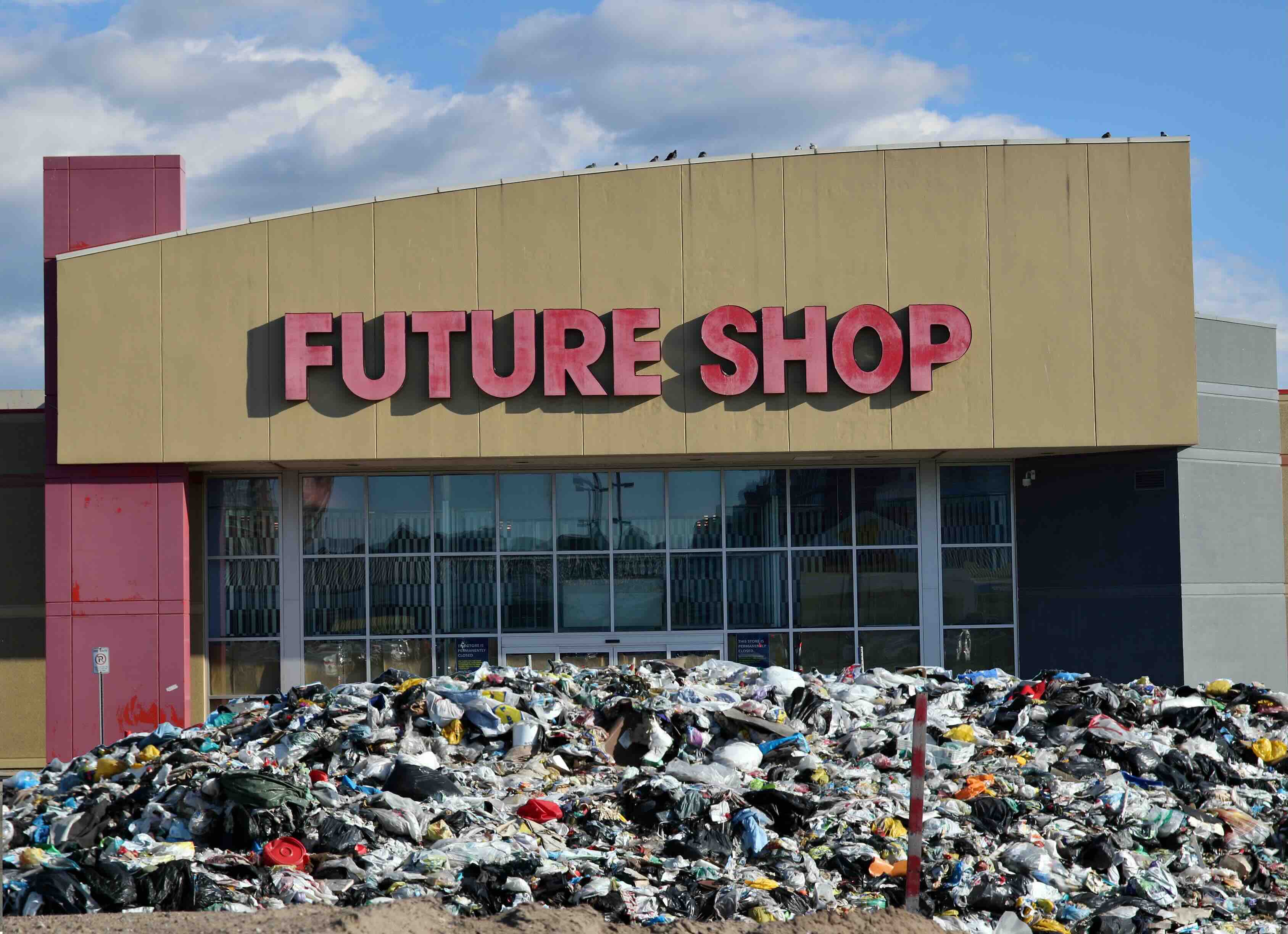
After that, the spell was broken. I realized that my technology products would all become garbage in the future, and much sooner than I expected. I started to see all my technology as future garbage.
Drawing a Line in the Sand
I’m taking a stand against the future garbage cycle. In the short-term, this means no more money for new devices. With the long-term goal of reinventing my tech ecosystem using things I already own and second-hand tech. The most important part is to not buy anything brand new.
I’ll make compromises . It’s okay if I have less computing power or fewer features.
I’ll dabble in hypocrisy. I still live in modern society and have to negotiate it.
I have questions that I need answered. How much can I cut down on e-waste by making different consumer and lifestyle choices? How much will I have to give up by relying on aging and second-hand products? Will I need to buy something new to keep using essential services? Can I replace mainstream commercial services with more durable alternatives?
I won’t have the answers to these questions for years. And this is the exciting part. This is where I learn, in a visceral way, how much I need mainstream technology, and how much of it is truly garbage.