I bought a laptop on Craigslist because I wanted an inexpensive entry into trying Linux. I’m weaning myself off of the planned obsolescence of consumer technology. And I’m preparing for a future where all of my computers are second-hand.
I scoped out laptops on Craigslist for months. Some of the things I wanted, like replaceable parts or more ports, are things you tend to get with older laptops, while newer laptops are thinner and lighter at the expense of repairability and ports. But coming from my very powerful M1 MacBook Air, I was worried that any Intel processor would run like crap by comparison. So I prioritized getting a newer processor (and a newer model) over other features.
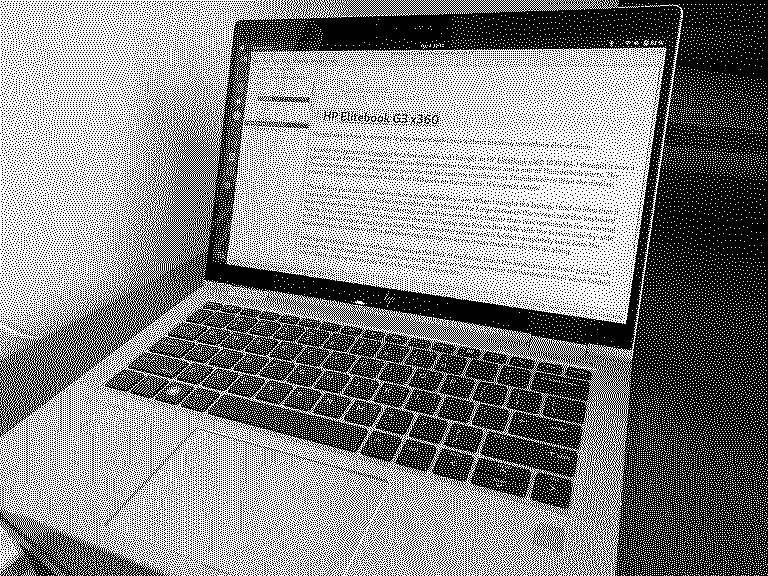
Finally I settled on an HP EliteBook x360 1030 G3 (Catchy name, right?!). It was a good price at $150 with an 8th generation Intel processor. It has a pair of USB-C Thunderbolt ports, a USB-A port, and HDMI.
I’m getting comfortable using Debian Linux. It’s not as polished as macOS, but I haven’t found any major usability issues. There are some quirks because apps are written using different tool kits and lack a common look and feel. (For example, the appearance of the window buttons for minimize, maximum, and close are different between applications. This does not happen on macOS.)
I see all this as a long-term investment in Linux as a skill.
It’s interchangeable components and applications gives me an insurance plan against future updates that I don’t like, and it means I can carry my experience to another Linux distribution that is nearly the same as what I’m used to.
I’m more prepared to take a cast-off computer and put it to use because Linux uses fewer system resources than macOS and Windows, and if that isn’t enough, there are distributions designed for less powerful hardware.
This 2018 EliteBook running Linux is good enough for my personal needs. With that, I can check out from consumer technology and keep this second-hand computer deal going forever. No more comparing what I have to the latest model. No more reading the tea leaves of the Apple rumor mill. And no more tech news.
To the tech reviewers and content creators, keep it up. After all, I’m gonna need your ten-year-old reviews whenever I get around to upgrading.
I spent most of the last 15 years trying and failing to be an independent mobile application developer.
I should note that, professionally, I’m still a mobile application developer. But coming out of college with my computer science degree, all I wanted was to be an independent developer. Emphasis on independent. I wanted to be my own boss and work on my own products. That was The Dream.
I released three different applications independently. One each year from 2010 to 2012. But none of those applications are available to download today. And of the dozen or so other applications I started since, not one of them has ever made it into any app store.
There are a lot of reasons why my production fell off in 2012. Unfocused development, for one. Two of my apps were for Android, and one was for Windows 8 (?!). I was even working on a hybrid mobile-web application at one point.
There was some procrastination too. And there was the kind of procrastination where I felt like I was doing something important because it was vaguely related to my goal. Prime examples were consuming tech news and fiddling with my computer/smartphone/tablet setup. The seasoned procrastinator knows this as yak shaving.
I still had to make money while doing all of that. I actively avoided commitment because I didn’t want other priorities to get in the way when I would leave in pursuit of The Dream. That motivation was short-sighted and lead me to make a lot of bad business decisions.
Contracting helped me avoid the commitment of salaried employment, or so I thought. I took the first clients that came along and they were pretty bad. Out of inexperience and hubris, I negotiated fixed-price contracts that looked good for me in the short-term, but they assumed the project scope was bounded and straight-forward. Invariably my clients demanded more features and changes and the project scope ballooned. The fixed-price of the contract meant that as the project dragged on, the amount I earned for the hours I worked fell below minimum wage. I worked myself into literal poverty.
The Dream was still alive, but being truly broke changed me. If I had made good money from one of my independent apps, or if a client that paid me fairly – rather than exploited my lack of business experience – I would be a very different person today.
Instead I spent several years living in a world where nothing was free and everything was a struggle. I scrambled in the hope to make some software product that would somehow catapult me out of my situation.
In that moment, my software ideas completely curdled. The purpose of my first few apps had been easy to explain to normal people. I made a music player, a LinkedIn app, and a text editor.
But after a few years of not releasing anything, and facing a harsh economic reality, my ideas turned into I need to release something that will make money, which is not the basis for a strong product vision. My ideas became technically convoluted, difficult to explain, and had questionable value.
For example, I spent a couple of years building a content management system for mobile apps. It was along the lines of the crappy cookie-cutter websites that a lot of restaurants have today, but in mobile app form. Sound good? Didn’t think so. It’s okay because it never saw the light of day anyway.
I felt like a failure all the time. I frequently ran into one of the unwritten rules of our society. If you don’t have any money, you need to have a story that you can tell middle class people about how you’re working to solve your lack-of-money problem. At least that’s the rule if you want to avoid strangers giving you advice on how to run your life.
In the early days, I could say I was an independent mobile application developer because I had a couple apps. No matter that I wasn’t making any money from them. I could spin it in the language of upward mobility, like saying I was getting experience or learning about the app market. But after several years without releasing anything, my story lost credibility. And I felt the discrepancy between my story and what I actually accomplished. How could I be an independent developer if nothing I made was available to the public?
I was reminded of this difficult time when a couple months ago I saw a video on YouTube called The Art of a Flop Era (a desktop documentary) by Elanor Nadorff. Elanor had a childhood dream of becoming a filmmaker and her college experience was cut-off by the Covid-19 pandemic. Now several years later, she hasn’t achieved anything that she hoped she would by 24 and feels ashamed and disappointed in herself all the time. At times she was driven by a fantasy that the excitement of her ideas would drive her. Instead her reality – which is the part I relate to the most – is that she’s overwhelmed by the weight of what she failed to accomplish and wonders if she will ever break out of the cycle. She is chasing a fixed point of success which seems to be getting farther away the more time passes.
For me a lot of the cycle of depression was a product of the perspective of youth. My mid-20’s was an imaginative boundary where I couldn’t envision much of anything beyond it. This is sometimes called a “quarter -life crisis”.
The Dream’s timeline carried me through college, with another four or five years to get my life together – putting me around 24 or 25. Reaching the end felt like approaching a kind of death, as if my life story was concluding. There would be no sequel because I hadn’t become interesting or successful enough to justify one.
I experienced – much like in Elanor’s video – that life goes on with or without a plan. I met someone that I was crazy about. I made efforts to show up for her in a way that I didn’t in previous relationships. We moved in together and merged lives, far more than being roommates that are romantically involved. Her concerns and responsibilities were added to mine. Her dog became my dog. Her family became my family. And not long after, we got married. And I got a full-time salaried job so she could quit hers to find another.
I found more purpose and meaning in a few shared experiences with my spouse than in all my pursuit of The Dream. I still clung to the idea of returning to it and I wasted plenty more time on it, but The Dream’s days were numbered, whether I accepted it or not.
It’s been about three years since I officially quit being – or more realistically aspiring to be – an independent software developer.
Once you see evidence that quiet quitting would be better for you, the real challenge is grieving the loss of something you thought was valuable, mourning the time and energy you invested into a relationship where you were not valued the way you deserved to be, and finding something new in your life that does give you what you thought (and were told) you would get from your work.
Giving up The Dream was my own quiet quitting. It was painful to give up being an independent mobile app developer, regardless of my lack of output and success. Even if my time as an independent developer was largely delusions of grandeur, they were my delusions of grandeur. They were my aspirations, my self-image. It was an important part of my life. And it was over.
I let The Dream drag on for so long because I love computers. I’ve been using them since I was four and can’t imagine life without them. But aligning my hobby with my career was a mistake—it turned everything I did into a pursuit of profit, even indirectly. I couldn’t just make a mobile app for myself like I had done when I made my first app. Instead I had to make an app business. And things that should have been fun and whimsical turned into thankless work.
That’s why it’s so satisfying to do things like make a retro video game system, try out using dumbphones, and writing for this website. These are things I never would have done a few years ago. I would have found them in conflict with The Dream. Better to be yak shaving.
Now, I look back on letting go of The Dream with relief. For years, I was haunted by imaginary obligations and the guilt that came with them. Cutting that madness out of my life freed me to focus on what truly matters—things unrelated to profit or success.
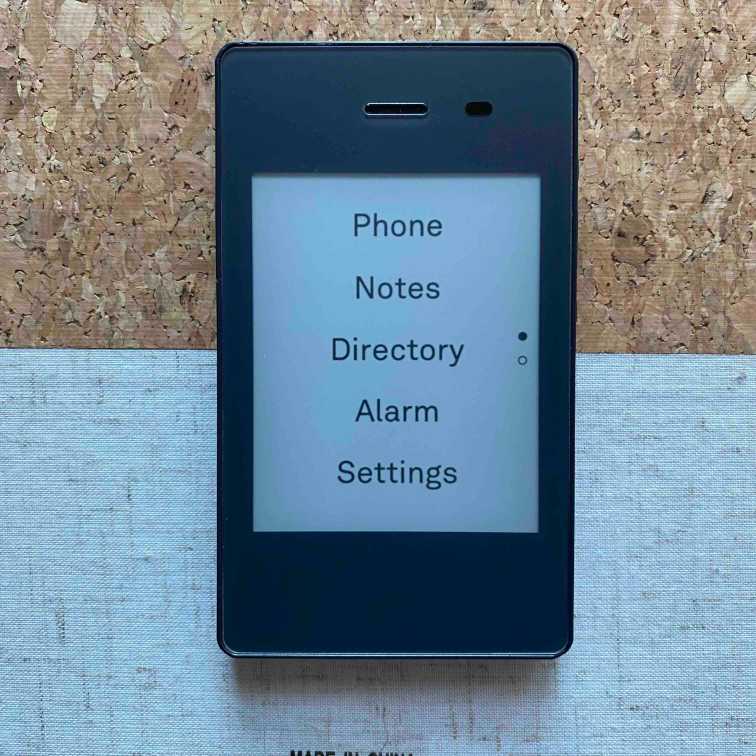
I have an annual tradition where I make a list of all of my favorite things from the past year. This year the headlining tech thing is the Light Phone 2.
I used to believe that making computers more accessible to everyone through smartphones would benefit the whole world. But as internet brain has afflicted the real world, I’ve looked for guardrails that reduce the flow of internet nonsense into my head. That search has taken a previously unthinkable idea – of using a non-smartphone or “dumb phone” – and moved it into the realm of reasonable responses to the current state of internet media.
I bought the Light Phone as a present for myself more as a novelty. It was not my goal for it to be a serious purchase or an across-the-board lifestyle change. I wanted to see how well it worked and maybe use it as a backup phone.
What made the Light Phone stand out from other dumb phones is that it has a Qwerty software keyboard. I didn’t have to sacrifice my familiarity with the layout of a keyboard and go back to the old rotten days of T9.
It has no web browser, no email, and no third-party applications. Instead it has a limited selection of applications called tools. Tools are available for calendar, calculator, turn-by-turn directions, and others, but they’re not intended as one-for-one replacements for smartphone apps. The tools exist to give me something, and maybe just enough, to not need my smartphone.
The transition away from my iPhone 11 Pro to using the Light Phone full-time was gradual and, as I said, not really my goal.
I had a rough start. At first I couldn’t get text messages from my friends that use iPhones because of iMessage, an instant messenger service that Apple puts on top of the text messaging application on the iPhone. If two people have an iPhone, messages are automatically sent over the internet using iMessage rather than as cellular SMS text messages. Because my iPhone was still linked to iMessage, I kept receiving messages from my iPhone-using friends on my iPhone even when my SIM card was in the Light Phone. I hoped that I could have the best of both worlds and keep using iMessage when my SIM card was in my iPhone then automatically switch to using use SMS when my SIM was in the Light Phone, but it didn’t work out that way. I had to opt-out completely.
Once I could send and receive calls and texts with everybody, using the Light Phone was an exercise in getting comfortable with discomfort. I mean, it can be scary to not have a smartphone out in the world. After 17 years of smartphone usage, I was out of practice living like that. I was used to having all sorts of apps and websites that remove or reduce uncertainty, even small amounts of uncertainty. For instance, I’ve used Google Maps so many times while walking around downtown just to check if I’m facing and walking in the right direction. With the Light Phone, all that uncertainty came right back.
So at first the Light Phone was just a home phone. I used my iPhone outside the house but switched to the Light Phone at home for serenity.
A couple months later, the Light Phone became my weekend phone. If my SIM card was still in my iPhone by Friday evening, I moved it back to the Light Phone. Over a few weeks, the Light Phone’s weekend time bled into the week.
Then at some point the Light Phone became my full-time phone. By then it happened without friction or fanfare.
The loss of iMessage has been difficult because photos sent over iMessage are full quality, while photos sent over text message are heavily compressed. I always want the highest possible quality images, especially photos of my family. I already have to ask Android users (whose messages are sent to iPhones as SMS text messages) to email me their photos, but now I have to ask that of everybody. I would like a better photo-sharing solution for that because nobody wants to be asked to send an email in the middle of a party, but that’s a project for another time.
Other than the loss of some conveniences, it’s been great. I really needed this. These days I don’t have the brain space to deal with all the things my smartphone would like me to do. The reduced mental load from switching to the Light Phone outweighs any features that I’ve lost.
Freeing up some brain space is a big deal for me as a parent of a toddler, where there are already so many reasons to feel impatient and frustrated. Like when I’m struggling to get my kid to leave the playground, or to stop throwing things, or to get ready for sleep. It’s easier to practice patience when there isn’t a bunch of “important” stuff I could be doing in my pocket. I would handle a lot of situations worse if I was also half-doing a bunch of stuff on my phone.
What sealed the deal for me was seeing how my kid reacts to the Light Phone. Normally if she spies any screen or smartphone, she hunts it down and messes around looking for stimuli. But with my Light Phone, she just picks it up and hands it to me because she knows it’s mine. She has no interest in it. I think a lot about the difference in her reactions. It really solidifies the idea that something about smartphones are attractive at a basic level, that both full-grown adults and toddlers are susceptible to its charms.
Whether to use a smartphone usually doesn’t feel like a choice at all. I’m grateful that the Light Phone exists to let me experiment and decide for myself. For most of the year I had the choice between a lifestyle with a smartphone or the Light Phone. I chose the Light Phone more and more often until it became my default. After this last year, I don’t see myself carrying a smartphone full time ever again.
I like the Light Phone for how well it works at its intended purpose, but I love it for what it represents. It demonstrates a happy medium where a technology product can provide utility without stoking my worst and most addictive impulses. That makes it my favorite tech thing of 2024.